Baby Nasal Congestion: Signs, Gentle Relief & Safe Care Guide
2026-08-21
Nasal congestion in babies can be quite distressing, and parents should always pay close attention. Especially for young infants, their nasal passages are naturally narrow, meaning even a small amount of secretion, crusting, or mild mucosal swelling can make breathing difficult. Many parents are familiar with this scenario: a baby stops every few sips during feeding, sleeps fitfully, or breathes loudly at night. Seeing your little one struggle to breathe while not knowing how to help naturally causes anxiety.
In fact, stuffy noses are very common during infant development. This article explores the common causes of baby nasal congestion, how to assess the situation at home, and gentle relief methods to help your baby breathe easier and sleep soundly.
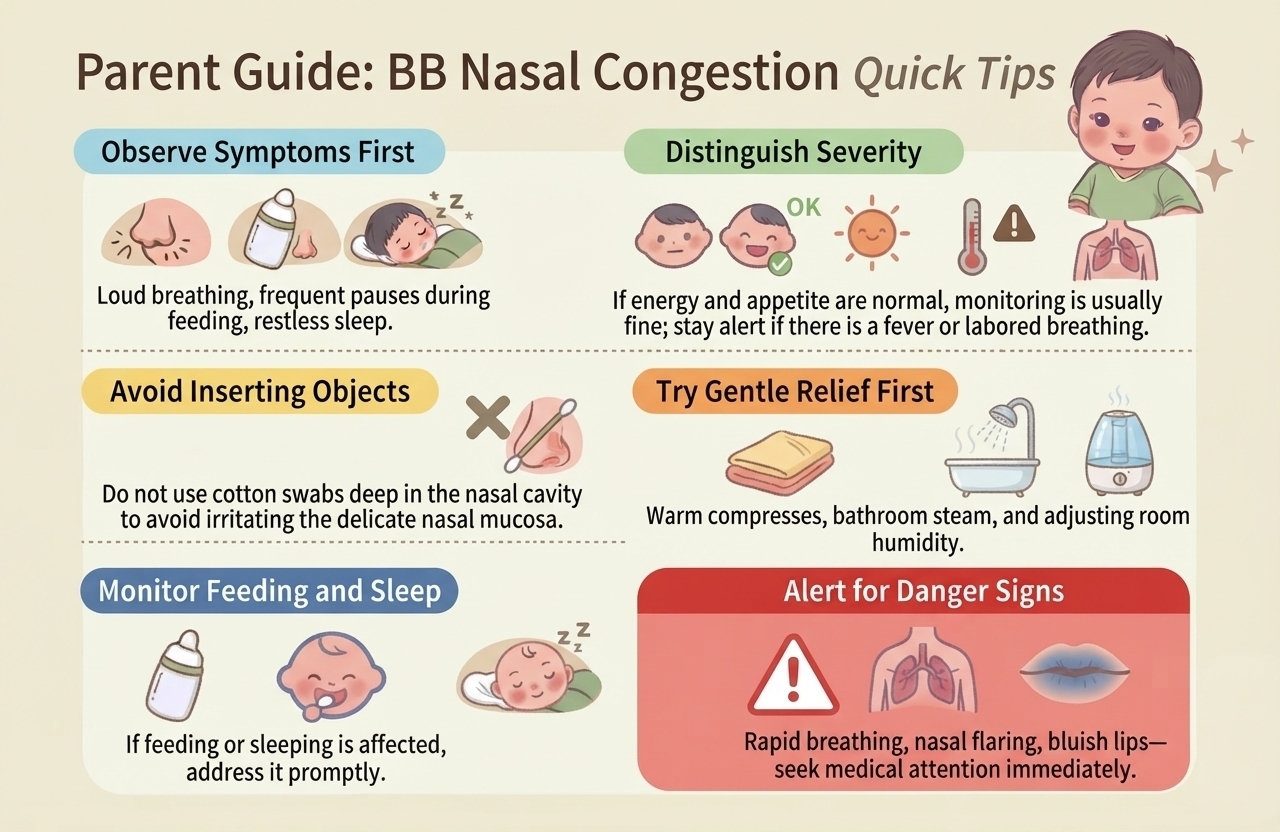
• Observe Symptoms First: Loud breathing, frequent pauses during feeding, restless sleep.
• Distinguish Severity: If energy and appetite are normal, monitoring is usually fine; stay alert if there is a fever or labored breathing.
• Avoid Inserting Objects: Do not use cotton swabs deep in the nasal cavity to avoid irritating the delicate nasal mucosa.
• Try Gentle Relief First: Warm compresses, bathroom steam, and adjusting room humidity.
• Monitor Feeding and Sleep: If feeding or sleeping is affected, address it promptly.
• Alert for Danger Signs: Rapid breathing, nasal flaring, bluish lips— seek medical attention immediately.
Is Loud Breathing Equal to Nasal Congestion? Parents Should Distinguish First
Many new parents experience this: when the house goes quiet at night, they hear a "hissing or wheezing" sound from the baby's breathing and immediately assume it's severe congestion. In reality, a newborn's nasal passages are relatively narrow, so even normal secretions can make breathing sounds quite noticeable. Sound alone does not automatically mean severe congestion.
What parents truly to look out for are signs that the baby is struggling because of a stuffy nose:
• Loud Breathing: Especially noticeable when lying flat or sleeping.• Pausing During Feeding: Needing to stop for air after every few sips of milk.
• Poor Sleep Quality: Waking up easily, crying shortly after being put down to sleep.
• Obvious Irritability: Crying more or demanding extra cuddles due to breathing discomfort.
• Labored Breathing: Pay special attention to nasal flaring or chest retractions.
Common Causes of Baby Nasal Congestion
A stuffy nose doesn't always mean a cold. For many infants, it might simply be narrow passages and accumulated mucus. However, it can also stem from allergies, infections, or less common congenital issues. Therefore, the first step is not to rush into "clearing the nose," but to understand the root cause:
• General Congestion: Mostly related to dry crusting or normal mucus buildup; energy and appetite are usually normal.
• Allergic Congestion: Common signs include sneezing, a runny nose, and rubbing the eyes or nose—often more noticeable in the early morning or in air-conditioned environments.
• Infectious Congestion: May be accompanied by fever, cough, and yellowish-green nasal discharge.
• Special Cases: If there is severe congestion or breathing difficulty shortly after birth, seek medical help immediately.
What to Do for Baby Nasal Congestion? Gentle Relief Methods to Try at Home
Most mild cases of baby nasal congestion can be managed with gentle, safe methods. The guiding principle is simple: soften the secretions first, reduce nasal irritation, and optimize the environment. Compared to digging into the nasal cavity, gentle care is far better suited for a baby's delicate mucosa.
• Warm Towel Compress: Apply gently across the bridge of the nose for 3–5 minutes to loosen mucus.
• Utilize Bathroom Steam: Sit in a steamy bathroom for a few minutes to help soothe the nasal passages.
• Adjust Room Temperature and Humidity: Avoid excessively dry or cold environments (especially important in air-conditioned rooms).
• Proper Nasal Care: Use isotonic saline/seawater sprays to safely soften secretions, following medical guidance.
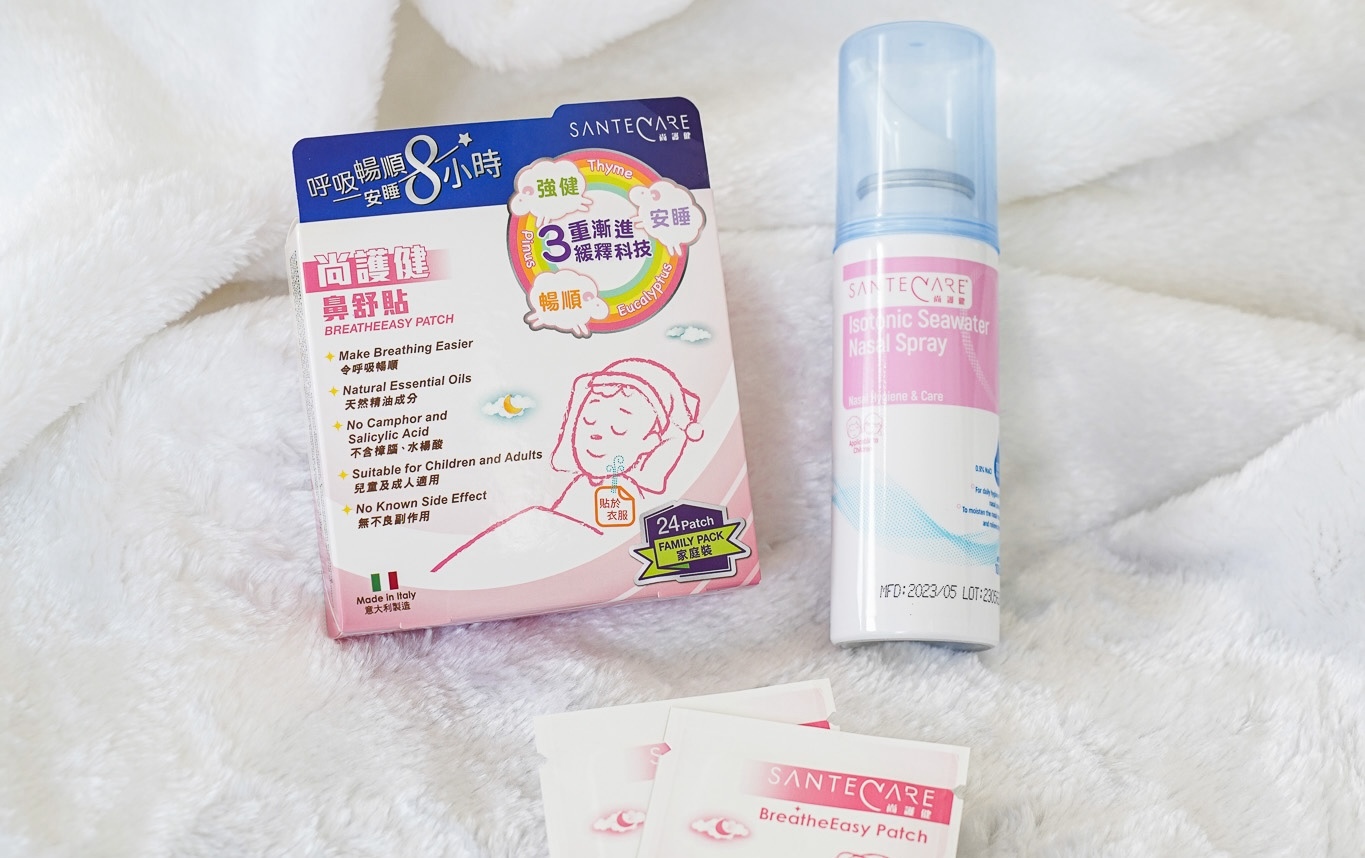
For a gentle and convenient option, consider using SanteCare Isotonic Seawater Nasal Spray, which helps gently cleanse the nasal cavity and reduces irritation to delicate mucosa.
Baby Can't Sleep Well Due to Nasal Congestion? Try These Tips:
• Hold the baby upright for a period before laying them down. • Perform relief steps part of your bedtime routine. • Pause appropriately during feeding to let the baby catch their breath. • Keep all cleaning movements extremely gentle.
Sometimes, what exhausts parents most is that a stuffy nose ruins everyone's night of sleep. If you are looking for a gentle, auxiliary method for daily care, consider the SanteCare BreatheEasy Patch. Simply apply it externally to the collar or clothing; natural essential oil scents are released slowly to make breathing feel smoother—ideal for bedtime use.
• 10-Second Rapid Relief: Quickly eases respiratory discomfort caused by colds or allergies.
• 8-Hour Long-Lasting Effect: Provides support through the entire night.
• 3-Stage Gradual Release: Clears the nose, aids sleep, and provides comprehensive respiratory support.
• Collar/Clothing Application: No direct skin contact needed, making it gentler on sensitive skin.
• Drug-Free Formula: Contains no camphor or salicylic acid.
• Wide Applicability: Suitable for babies aged 0 months+, children, adults, and individuals with G6PD deficiency.
For busy parents, the beauty of the SanteCare BreatheEasy Patch is that it requires no rubbing or direct skin contact, making it effortless to add to the nightly routine.
🛒🛒🛒🛒Ready to get relief? Get yours today in Singapore:
If congestion is simply due to normal secretions or mild irritation, it usually resolves within a few days. If caused by a cold, a runny nose and stuffiness generally improve step-by-step over 1 to 2 weeks.
• Days 1–3: Usually the most uncomfortable phase; the baby may be irritable and sleep poorly.
• Days 4–7: If it's mild cases, breathing sounds and sleep typically stabilize.
• Weeks 1–2: Cold-related congestion and runny nose mostly clear up during this window.
• If Unimproved After Two Weeks: Evaluate for potential allergies, lingering infections, or other underlying issues.
⚠️ When Does Baby Nasal Congestion Require Medical Attention?
Consult a pediatrician immediately if the baby's nasal congestion is accompanied by any of the following warning signs:
• Rapid breathing or severe nasal flaring.
• Chest retractions or wheezing sounds.
• Refusal to feed or a significant drop in milk intake.
• Fever, lethargy, or thick, discolored nasal discharge
• Bluish lips or decreased overall activity levels.
Parents Remember: Observe First, Treat Gently
Baby nasal congestion is very common, but it should never be taken lightly. As long as you monitor the baby's breathing, feeding, and sleep patterns alongside gentle relief methods, most situations will improve. However, if congestion starts impacting feeding or energy, or if signs of labored breathing appear, seek medical evaluation right away.
Baby Nasal Congestion FAQ
Q1: Is nasal congestion in newborns normal?
Sometimes, yes. Because newborns have naturally narrow nasal passages, even minor secretions can make their breathing sound congested. If their energy, feeding, and sleep are normal, monitoring is usually sufficient.
Q2: What can I do first if my baby can't sleep due to a stuffy nose?
Try a warm towel compress, use bathroom steam, or adjust room humidity and temperature to help them breathe more comfortably, then monitor if their sleep improves.
Q3: Can baby nasal congestion lead to suffocation?
Mild nasal congestion usually doesn't, but if rapid breathing, nasal flaring, chest retractions, or bluish lips occur, seek medical help immediately.
Q4: At what age should parents be extra cautious?
The younger the infant, the more vigilant you need to be—especially newborns up to 3 months old, whose nasal passages are extremely narrow. If congestion impairs feeding or breathing, seek professional advice promptly.
Q5: How long does it take for a baby's stuffy nose to clear up?
Generally, mild congestion improves within a few days, while cold-related congestion takes about 1 to 2 weeks. Consult a doctor if symptoms persist past two weeks.
Q6: Can the SanteCare BreatheEasy Patch be used safely on newborns?
Yes. The SanteCare BreatheEasy Patch features an external clothing-application design that requires no direct skin contact, making it suitable for babies aged 0 months and above, children, adults, and individuals with G6PD deficiency.